- Home
- Cetaceans
Cetaceans
All cetacean species found in our seas are on the IUCN (International Union for Conservation of Nature) Red Lists, in categories that highlight the need for more information and/or urgent conservation and protection measures. Many are also covered by international directives, conventions and agreements for the protection of habitats, species and biodiversity. Italy has also signed up to two major international agreements for the conservation of cetaceans: the ACCOBAMS agreement and the Pelagos Sanctuary.
The Pelagos Sanctuary for Mediterranean Marine Mammals was created in 1999 through an international agreement between Italy, France and the Principality of Monaco, and is the world’s first protected area dedicated to the protection of cetaceans. This stretch of sea, teeming with life, covers around 96,000 km2 and in Italy spans three regions: Liguria, Tuscany and Sardinia. It therefore includes several protected natural areas, among them the Asinara National Park and Marine Protected Area. It is made up of deep seabeds and upwelling currents that encourage the formation of large plankton blooms, whose concentration peaks from January to July, providing ideal feeding conditions for cetaceans.
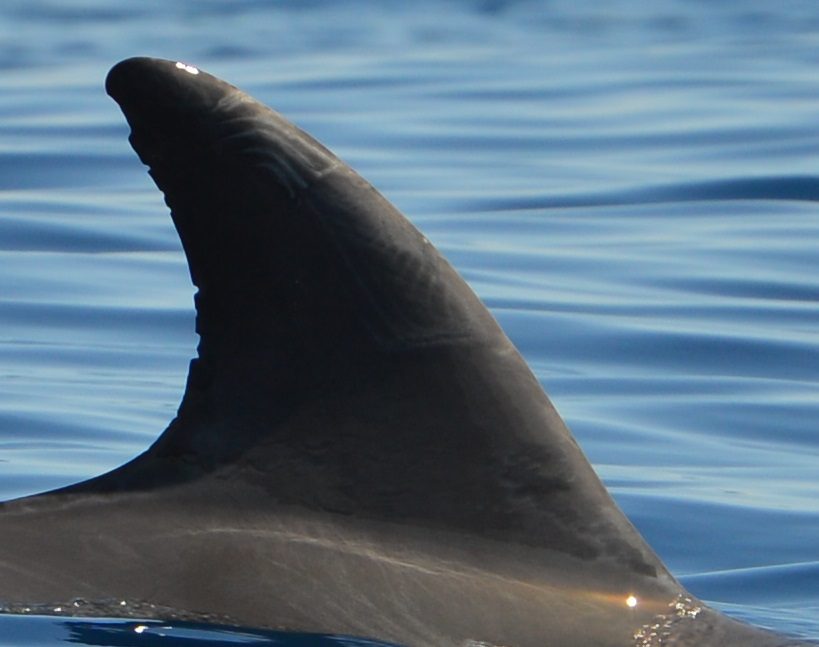
Our research in the Asinara Marine Protected Area involves sighting cetacean species, with particular attention to the population of bottlenose dolphins (scientific name: Tursiops truncatus), a coastal species that is easily spotted in our study area. Photo-identification is the technique used to recognise individual animals, which are added to a catalogue, by analysing the outline of the dorsal fin, which bears permanent markings unique to each individual.
Recovering stranded animals is also essential. Studying them makes it possible to establish the causes of death and to identify potential risk factors for the population, such as infectious diseases.